A cat brings a dead cursor and lays it in front of the camera, as a present for their human
You read that right, the page it jumped out of has three claw rips. That was one of six proposals the agent wrote when I asked it to let the handrail go and give me concepts for animations.
The stakes were concrete. On the designer view of hretheum.com/designer a film starts every now and then: an animation that begins with exactly the page you are reading and turns it into something else. Every film comes from a single prompt for Fable 5.2, a model that takes the whole task at once and hands back finished code in Three.js, a library for 3D graphics in the browser. A weak prompt gives you a pretty toy. Or a reader's overheated laptop.
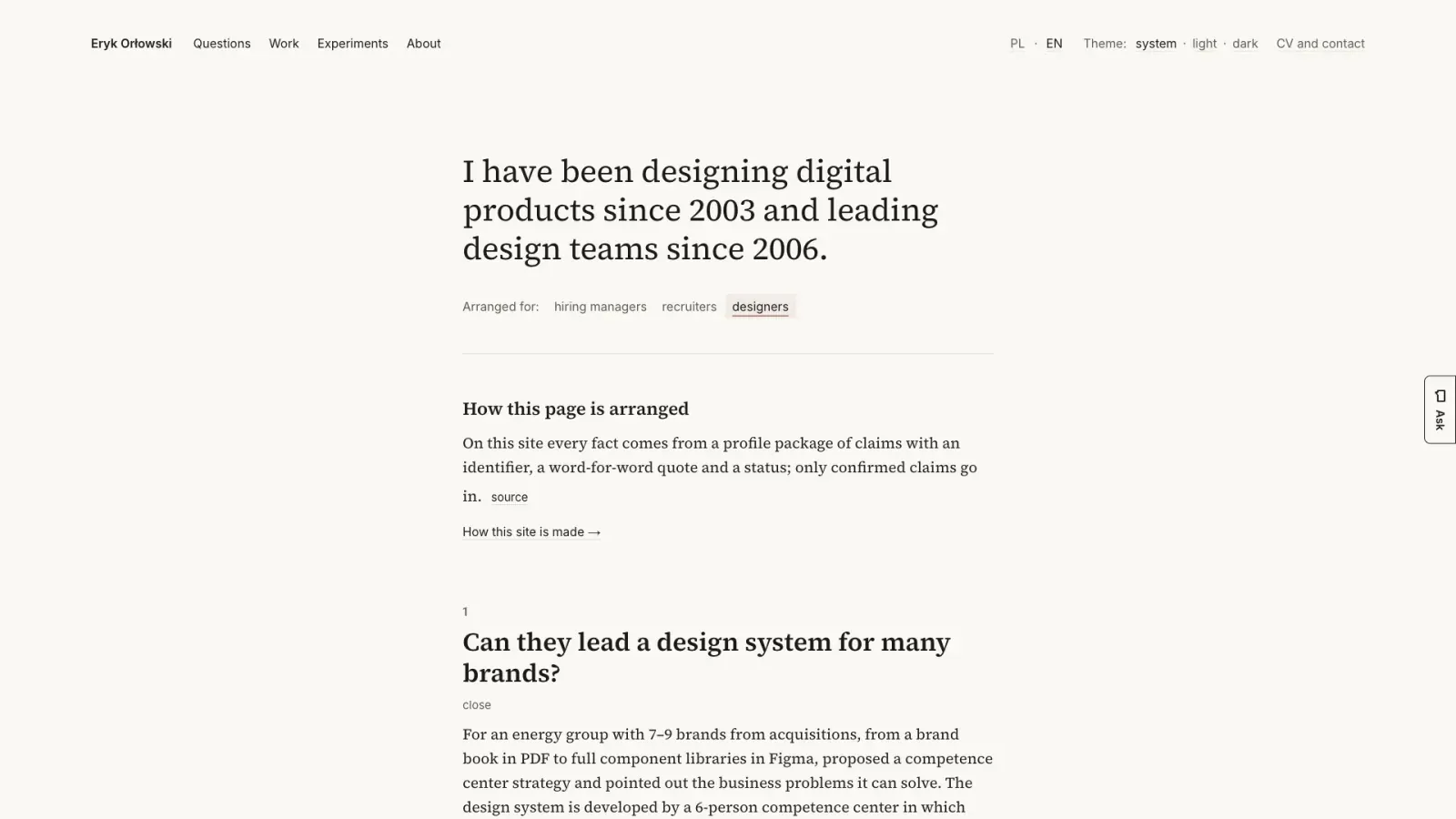
To be clear about what this is: the content of the page is real, and it stays real. When you leave it alone for a moment, an animation takes it over, a different one of six every time, picked at random. The page is the carrier, and the set of those six films is the pool we draw from.
Whose grammar is it
It started with a collection I found on the interwebs: 63 prompts for Three.js scenes, from a Starry Night you can fly into to a firework seen from the inside (the petergpt collection on GitHub). It was a fat source of inspiration for me, and I wanted to factor universal rules for building prompts for code-generated animation out of it.
The author of the collection is Peter Gostev (account petergpt on GitHub, account petergostev on X). I am publishing this text with the collection author's permission.
How did I use it? I took the grammar, the rules: observations like start with what the thing must not be; name the one sentence the whole piece turns around; end with a list of conditions by which you will call the work finished. None of the text of the source prompts made it into my films, I rewrote it in my own words (or so Claude assures me).
A prompt that leaves no choice
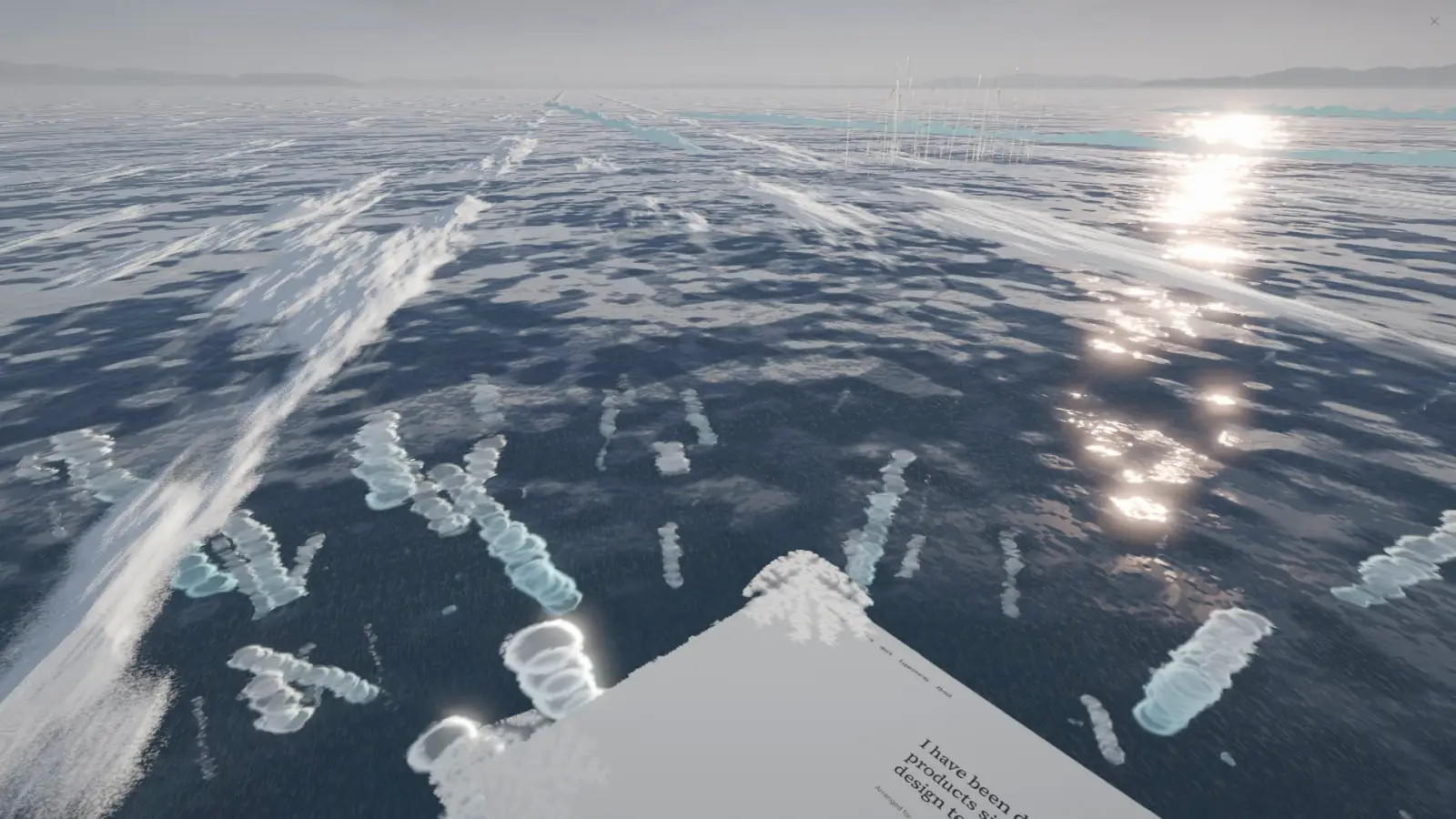
The easiest way to show this grammar is on one prompt. The film Ice: the page freezes from the corners, patterns of frost spread across the text, the camera pulls back and it turns out the sheet is sunk into black ice on a lake at dawn. Every click strikes the ice and sets off a crack that sings like a real frozen lake (see the film Ice).
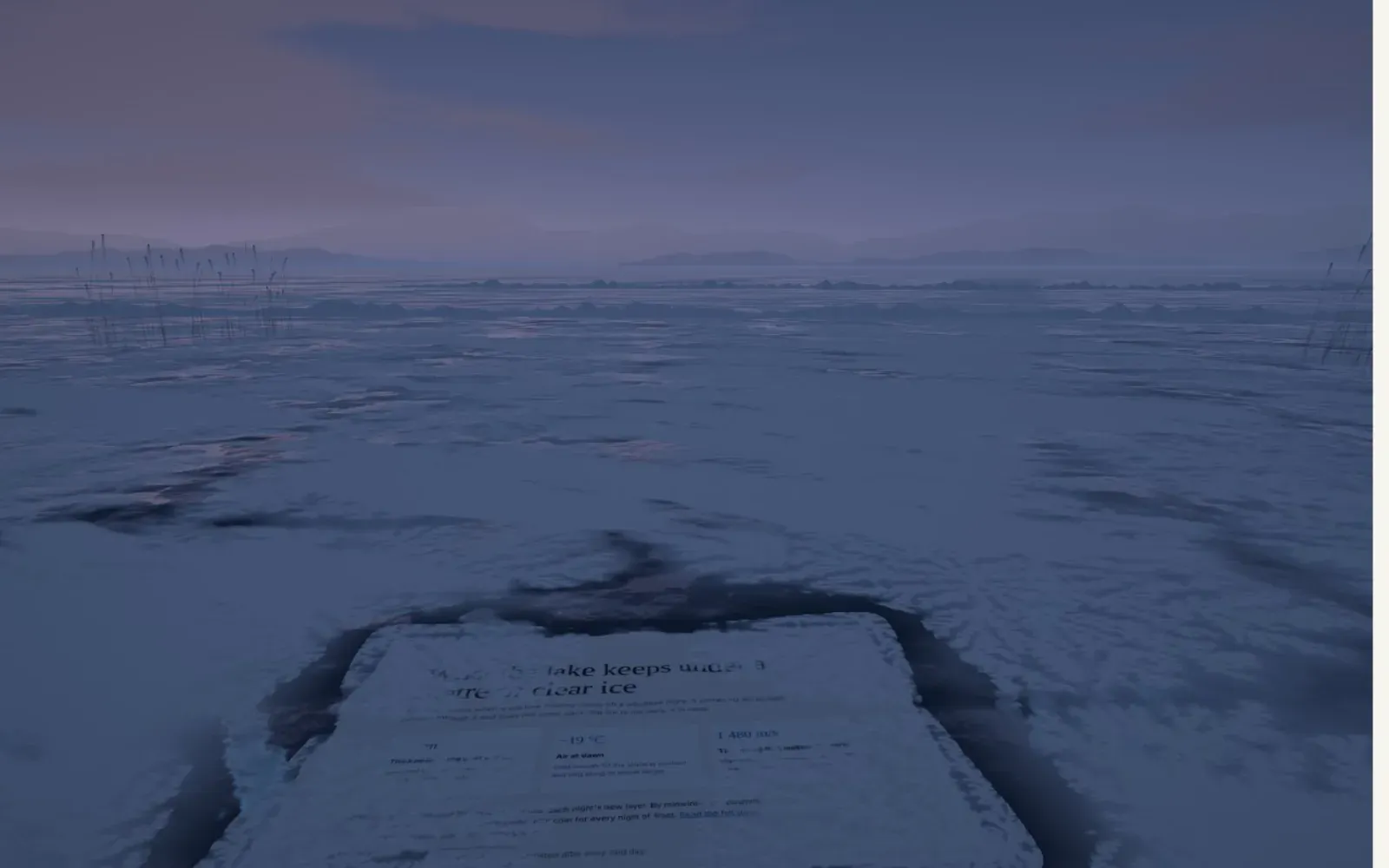
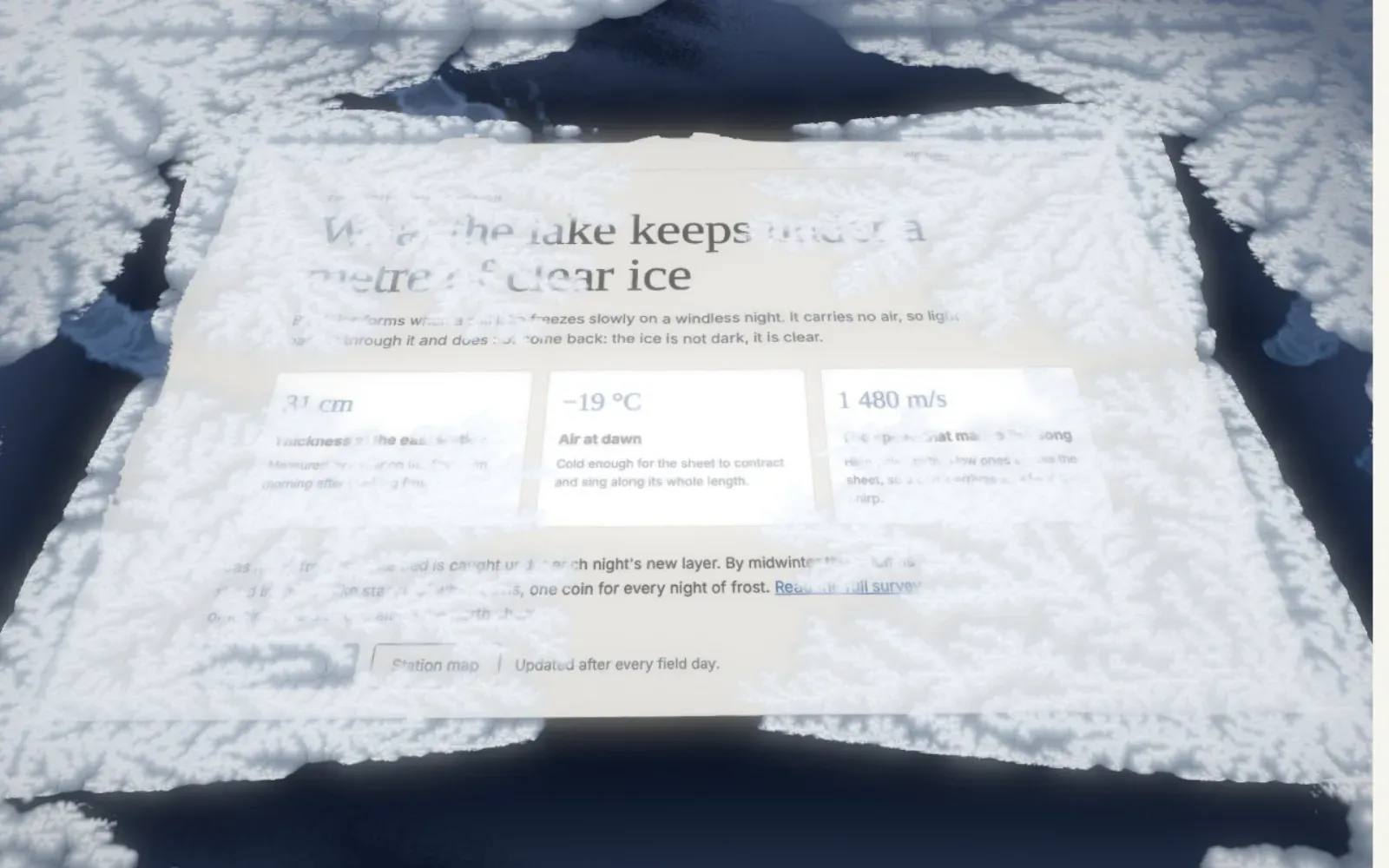
The prompt runs to almost two and a half thousand words, but the length is not what matters here. The words do not describe aesthetics. Every sentence hands the model a design decision it would otherwise have made on its own, by definition at a very average level (because that is how models work): where to start, what the film must not be, what has to survive, what to do when the user's computer cannot cope, how to tell the job is done. A prompt that says make it beautiful leaves those decisions to the model, and what you get back is indistinguishable crap.
Something had to go wrong ;]
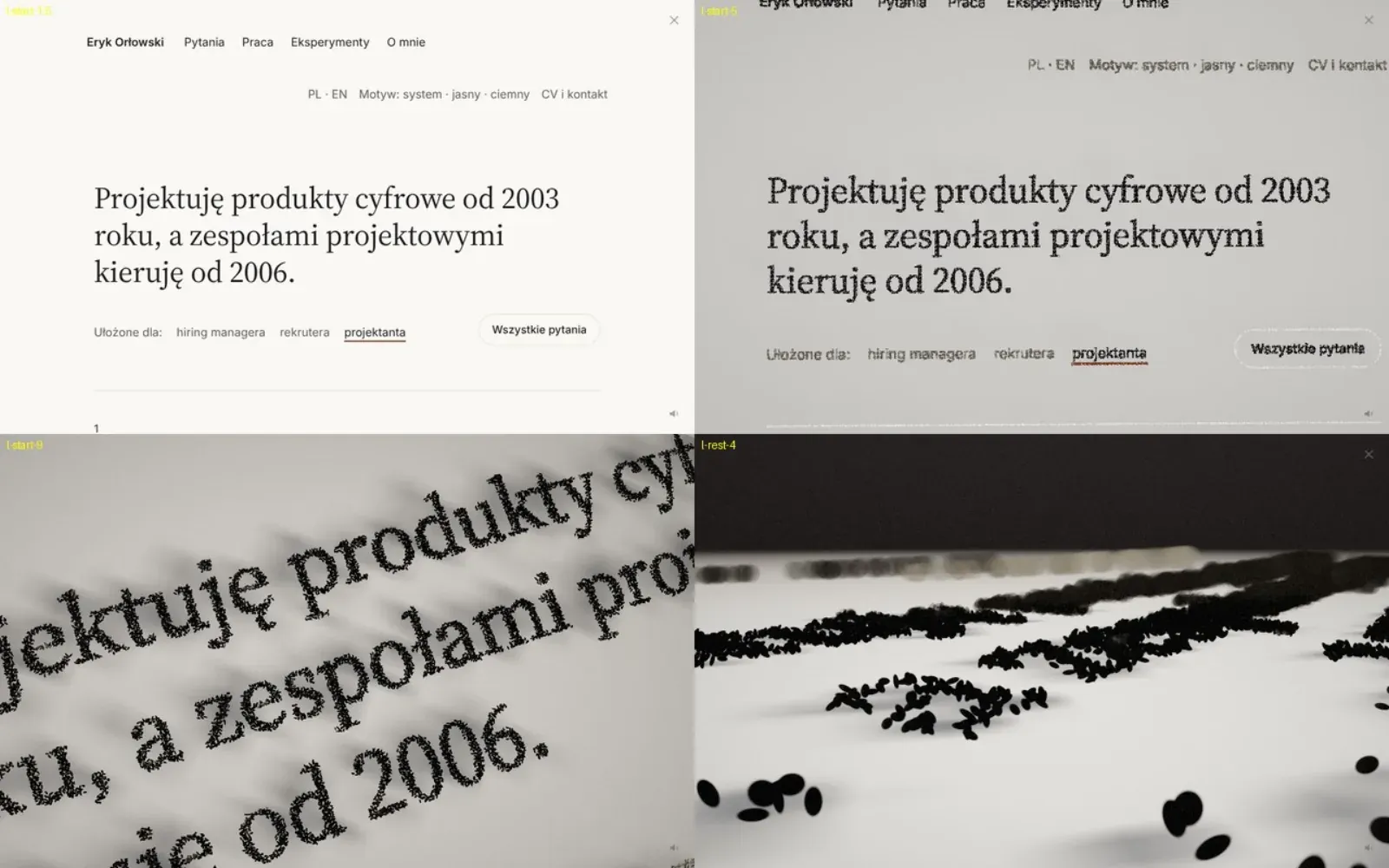
The first version of the skill assumed that every film is a world to wander through. The real prompt did not ask for such a world: I wanted mushrooms to grow out of the flat page, join up into a mycelium and assemble into a monster (inspo: The Last of Us). In that version the skill had no good category for it, so it was rebuilt around form: film, toy, simulator, page takeover, show in a loop. The form decides which parts of the prompt are mandatory before the main theme is even named.
The next version cost the most work. We designed the ink film, which paints words in water, as a piece of its own. When it was supposed to join the pool on the site it turned out to fit nothing: a different start, its own buttons, typing from the keyboard, which the page does not pass on. A second prompt was needed, a repair one.
What works best, according to Claude
Three things do most of the work. First: physical realism rather than photographic. Animations are typically generative, so the effect works best where behaviour can be calculated: light in ice, colours in a soap film, the erosion of stone. Faces, fur and wet tissue up close come out artificial (wait until you see the insanely huge whiskers of the rats in the sewer), so there is not a single face in the pool. Second: acceptance conditions (DoD) written as for an audit, with numbers and with the rule that every feature mentioned has to be visible. Third: a conversation in which the agent proposes the palette, the typeface and the technique and I only choose. The vision is mine. Knowing which motion curve gives a soft landing does not have to be (this text is generated by Claude so I can only agree, cannot into motion curves).
How the model works, in principle
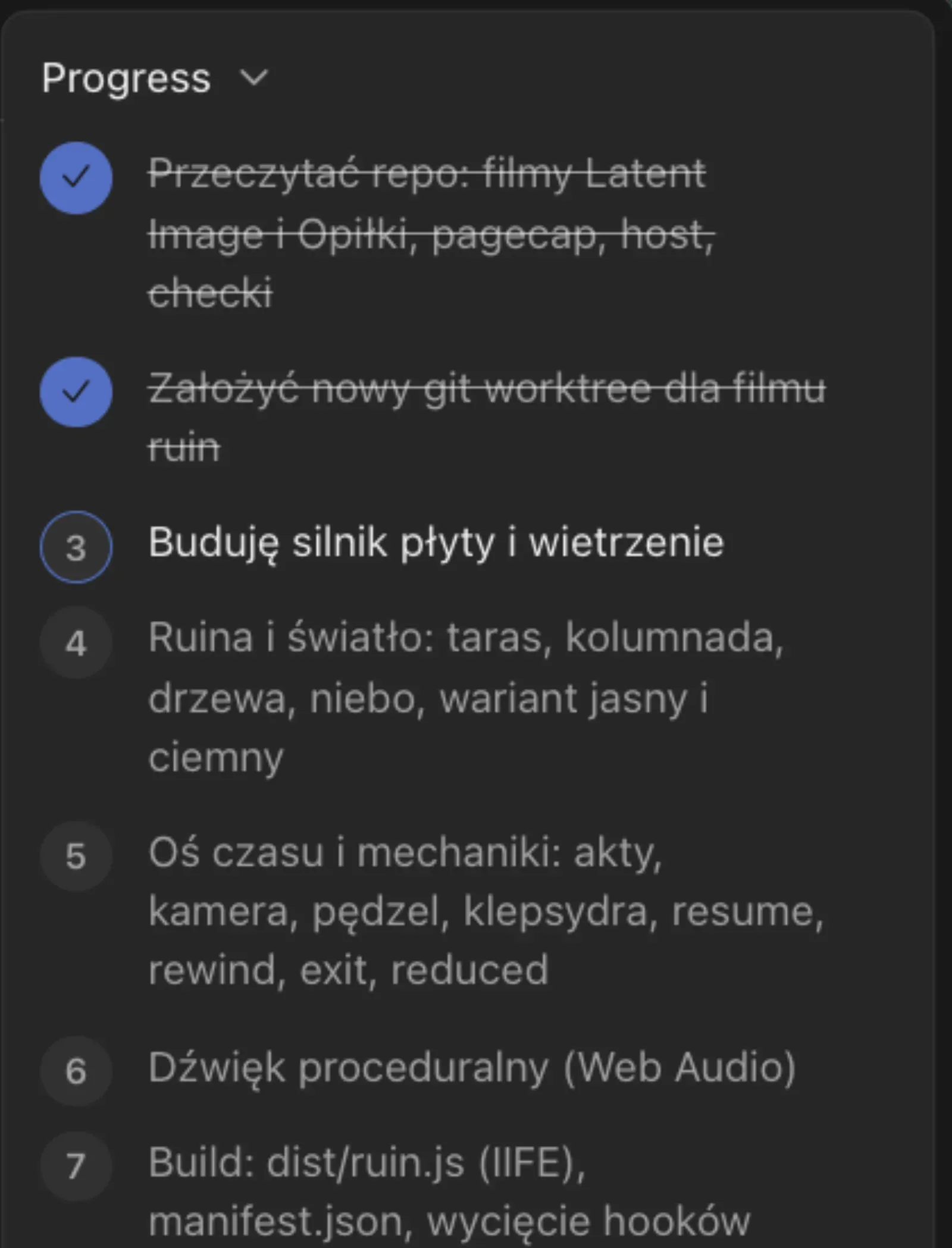
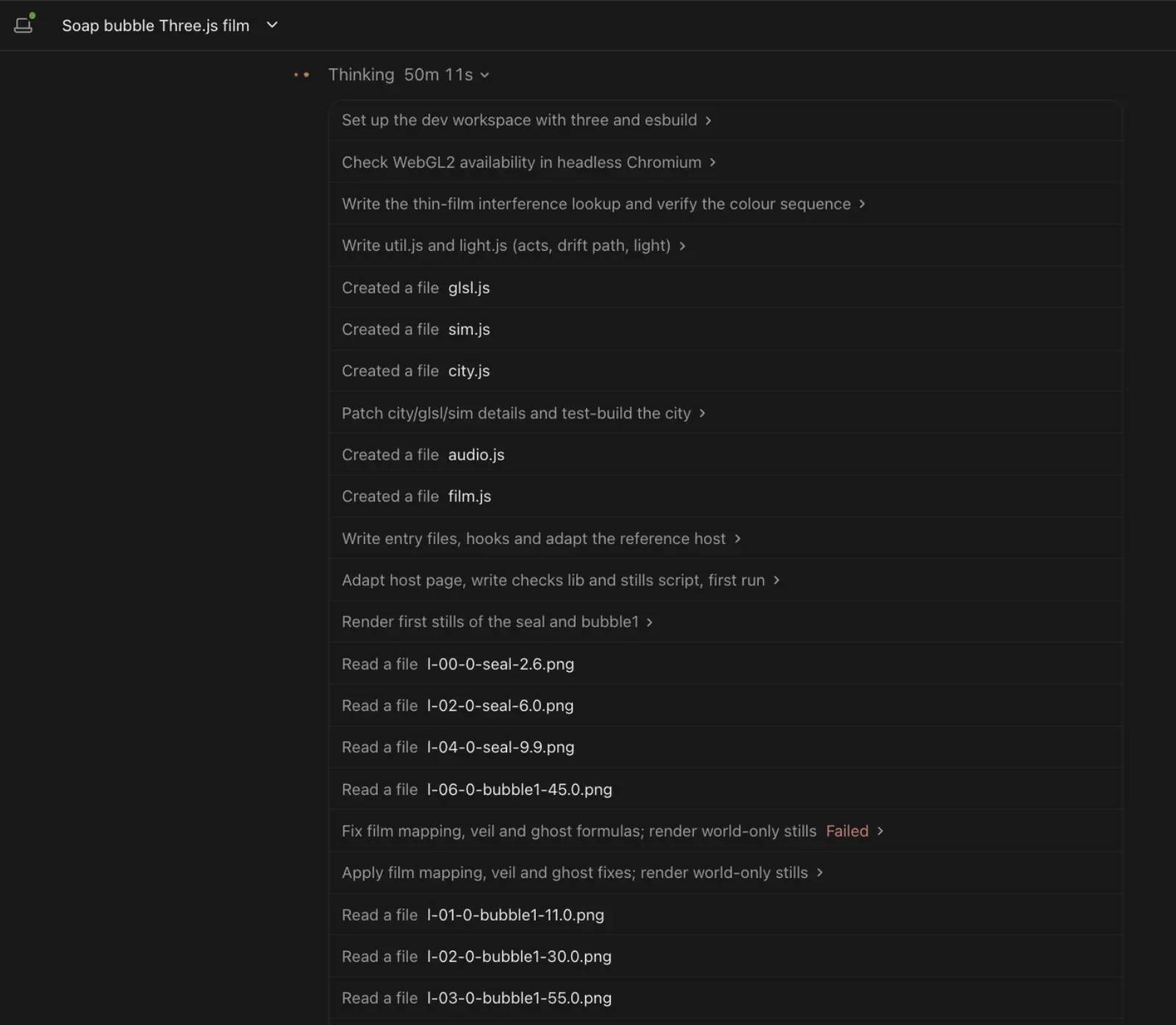
The prompt goes to Fable, which works alone through a long session. In principle the run goes like this: it reads the code of the page and the existing films, makes a plan, builds, takes screenshots of key frames, compares them with the description, fixes, and at the end runs the contract tests and writes down what it did not check. I don't know whether this will surprise anyone, but with Extra Effort Claude can generate an animation for more than three hours, and the fixes to a single scene, seemingly small, murder it for another hour. Long live the usage-reset feature in Claude Desktop! ;]
See it live
The six films in the pool have permanent addresses. Each opens an ordinary page in the designer view and after about two seconds of idleness exactly that film starts. The Polish versions sit at the same address under /pl.
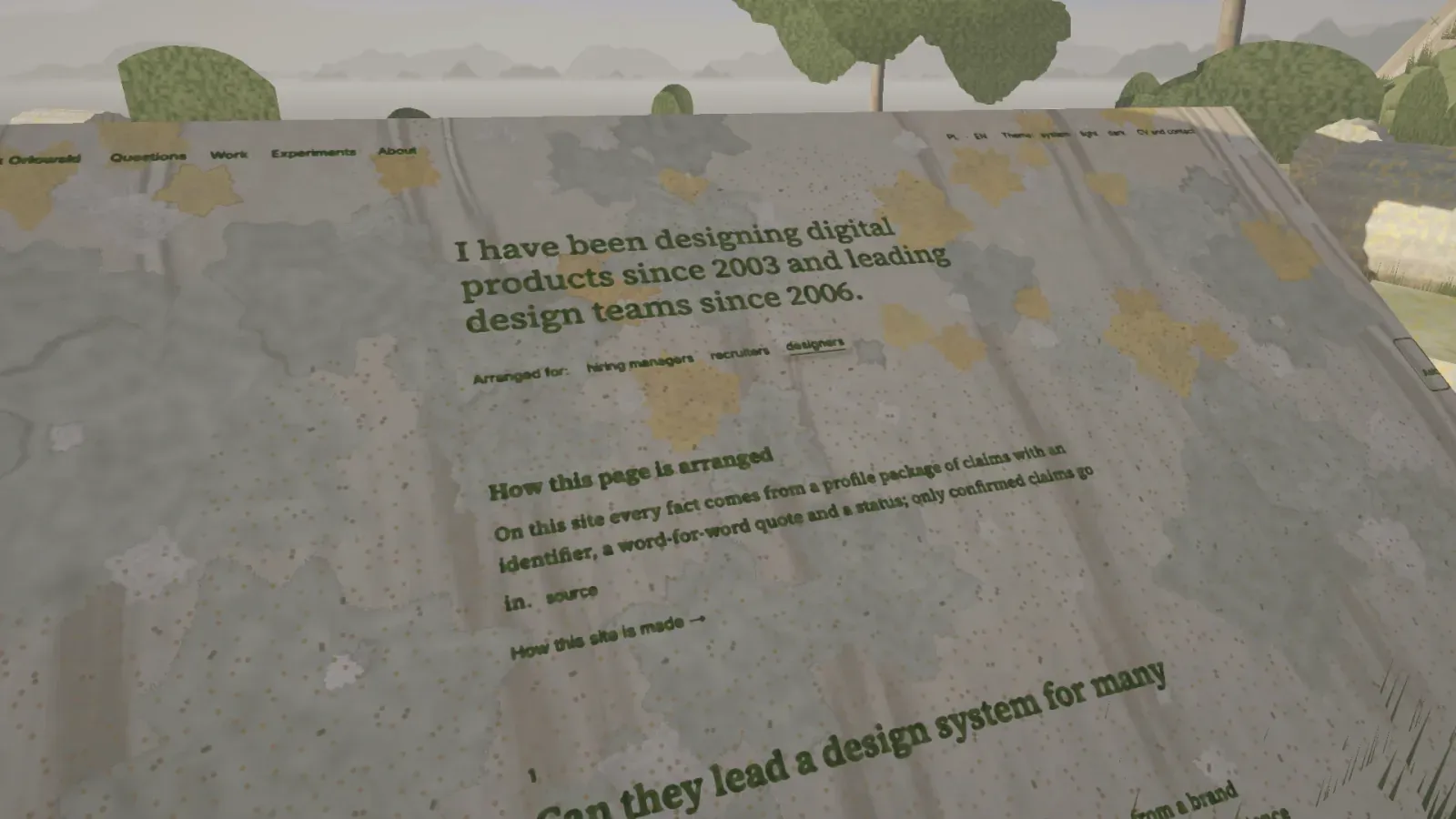
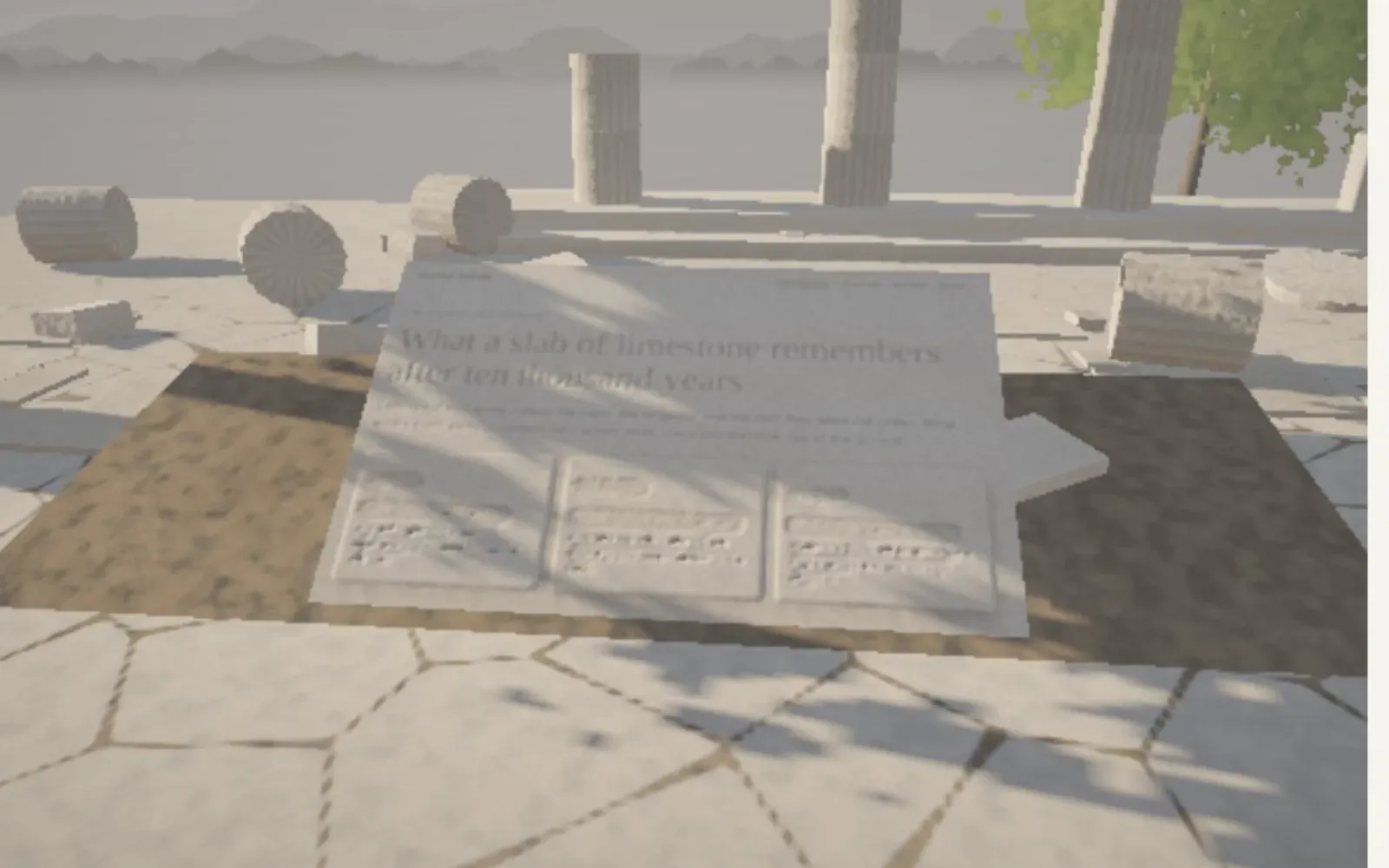
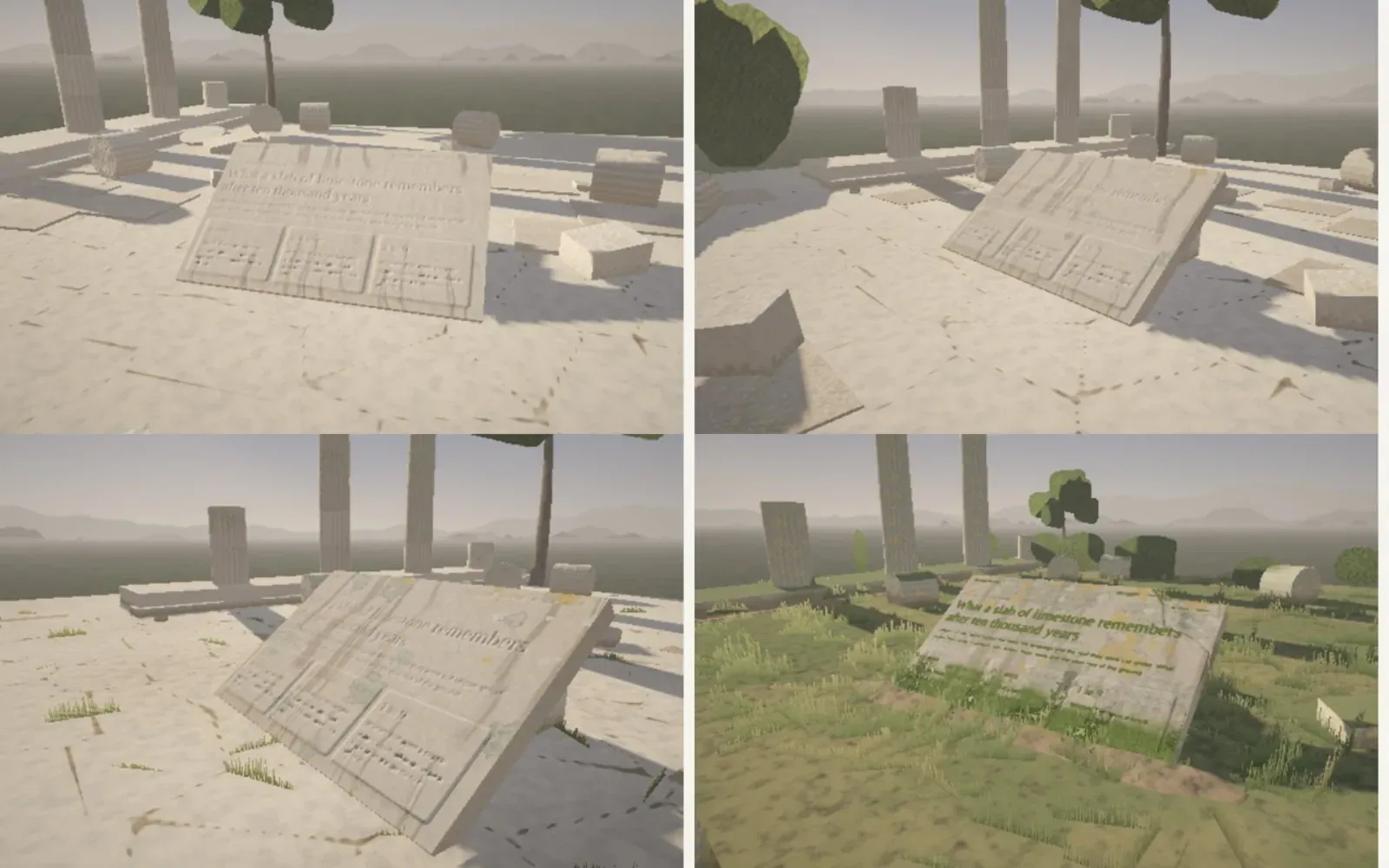
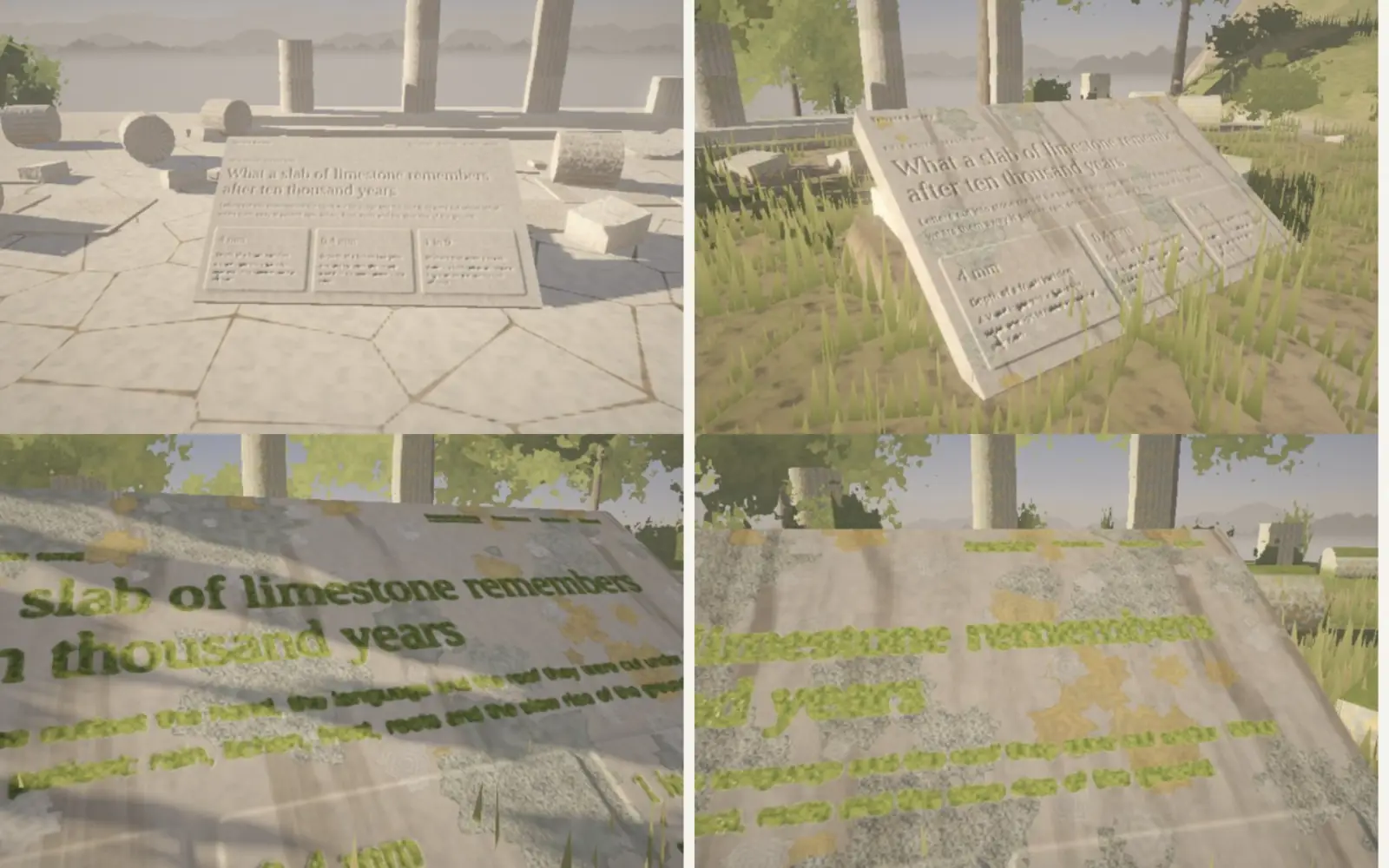
Ten Thousand Years (PL): a slab that lives through ten thousand years in five minutes. This is what my profile looks like after ten thousand years of waiting for a recruiter's visit.
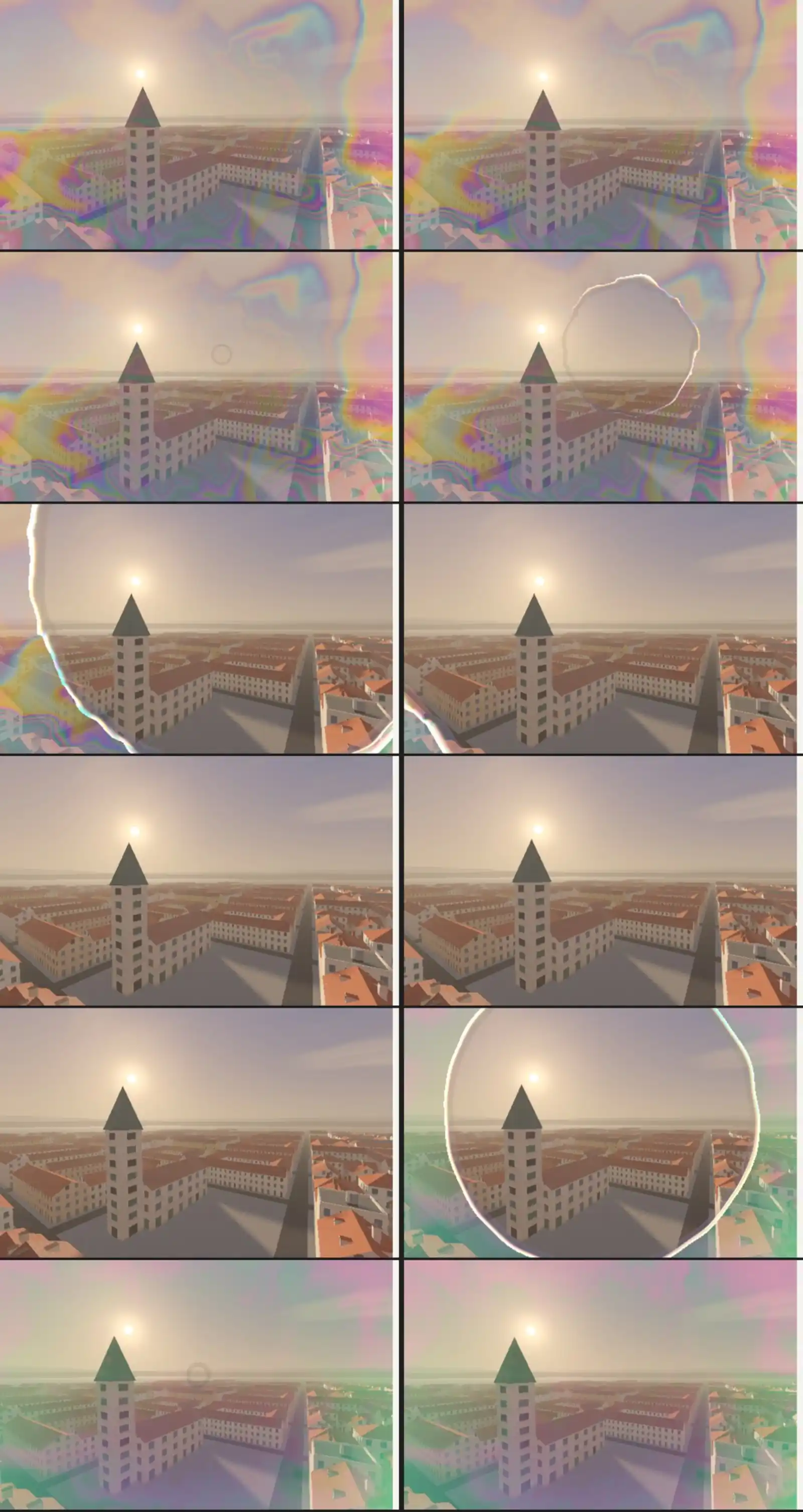
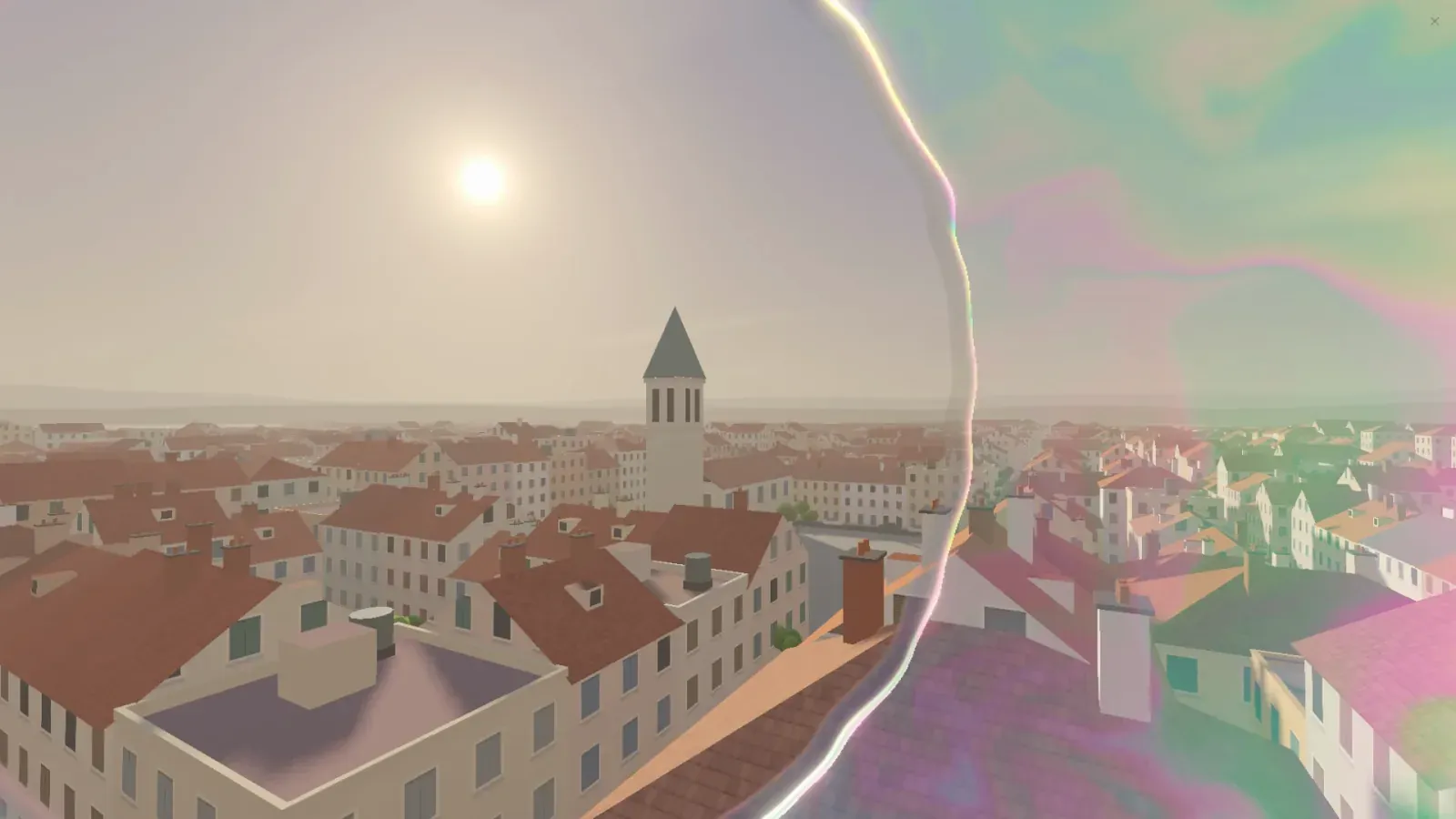
Bubble (PL): a soap bubble seen from the inside; the page seen through a layer of film in thin-film colours, the film bursts and a new one appears. The cycle lasts a nominal 300 s (an untouched bubble bursts by itself between the 75th and 87th second, so the cycle can be 0–12 s shorter) and the film loops.
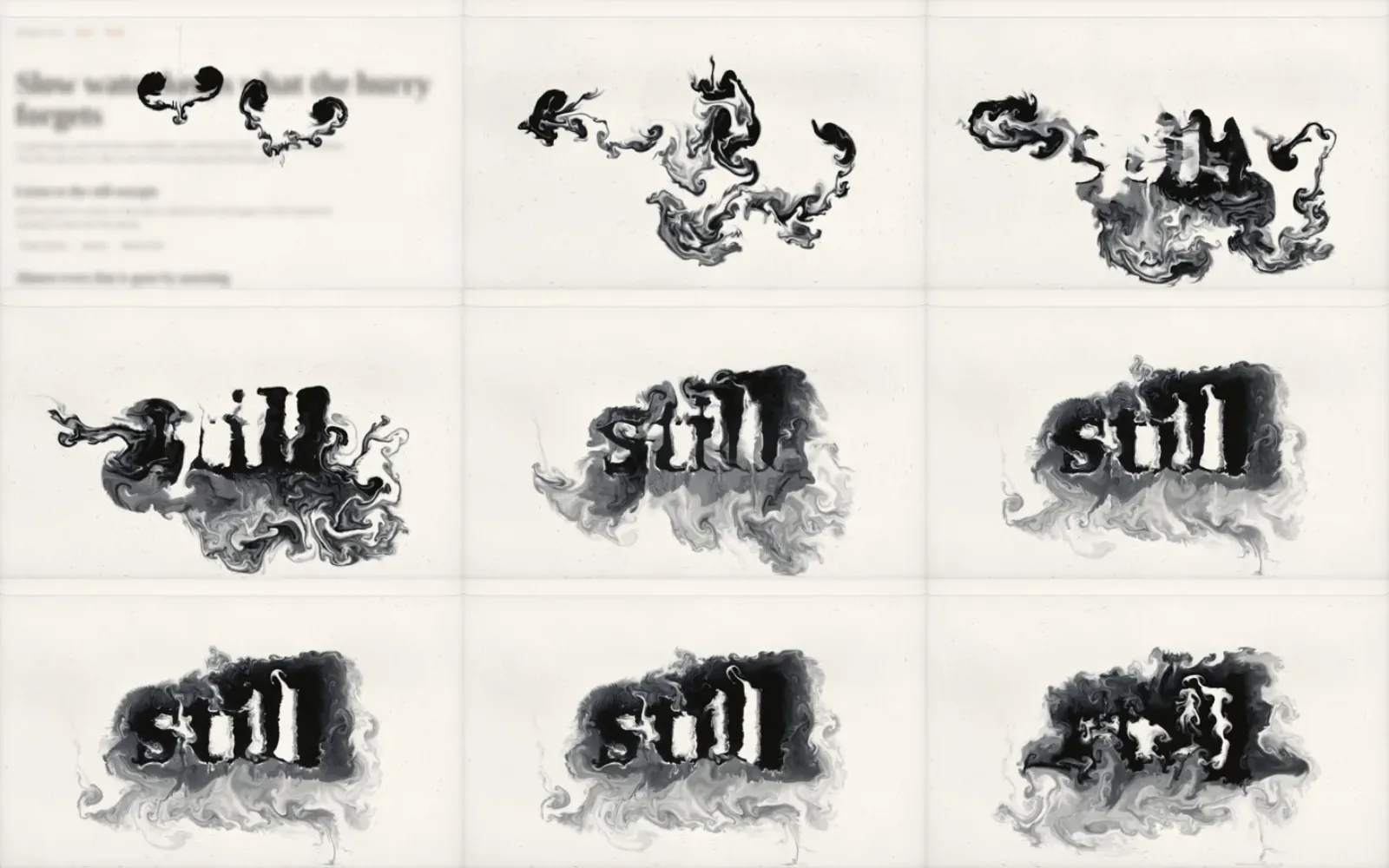
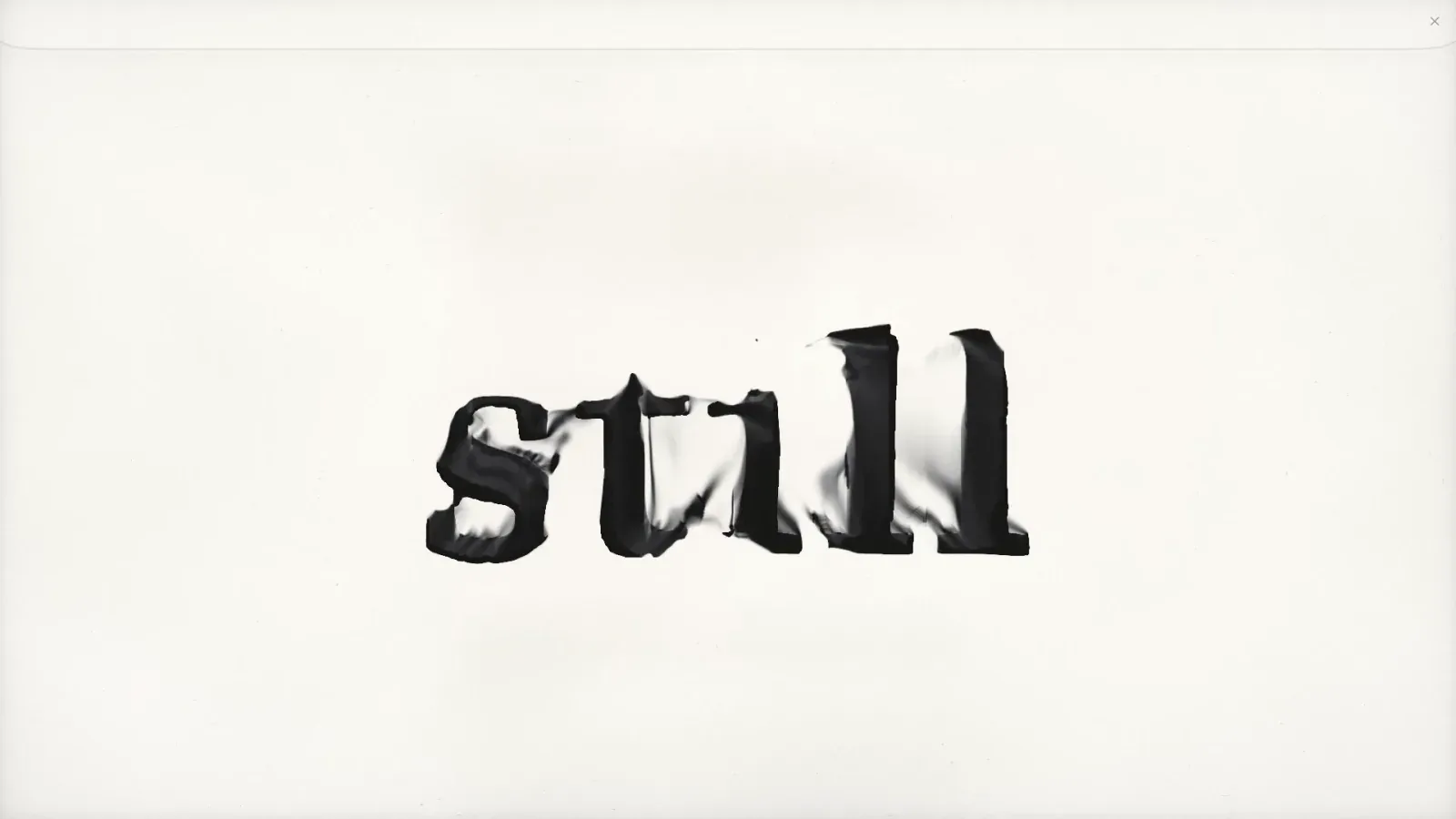
Ink (PL): ink falls on the page and forms a word. The shortest of the first four: a minute and a half, looping.
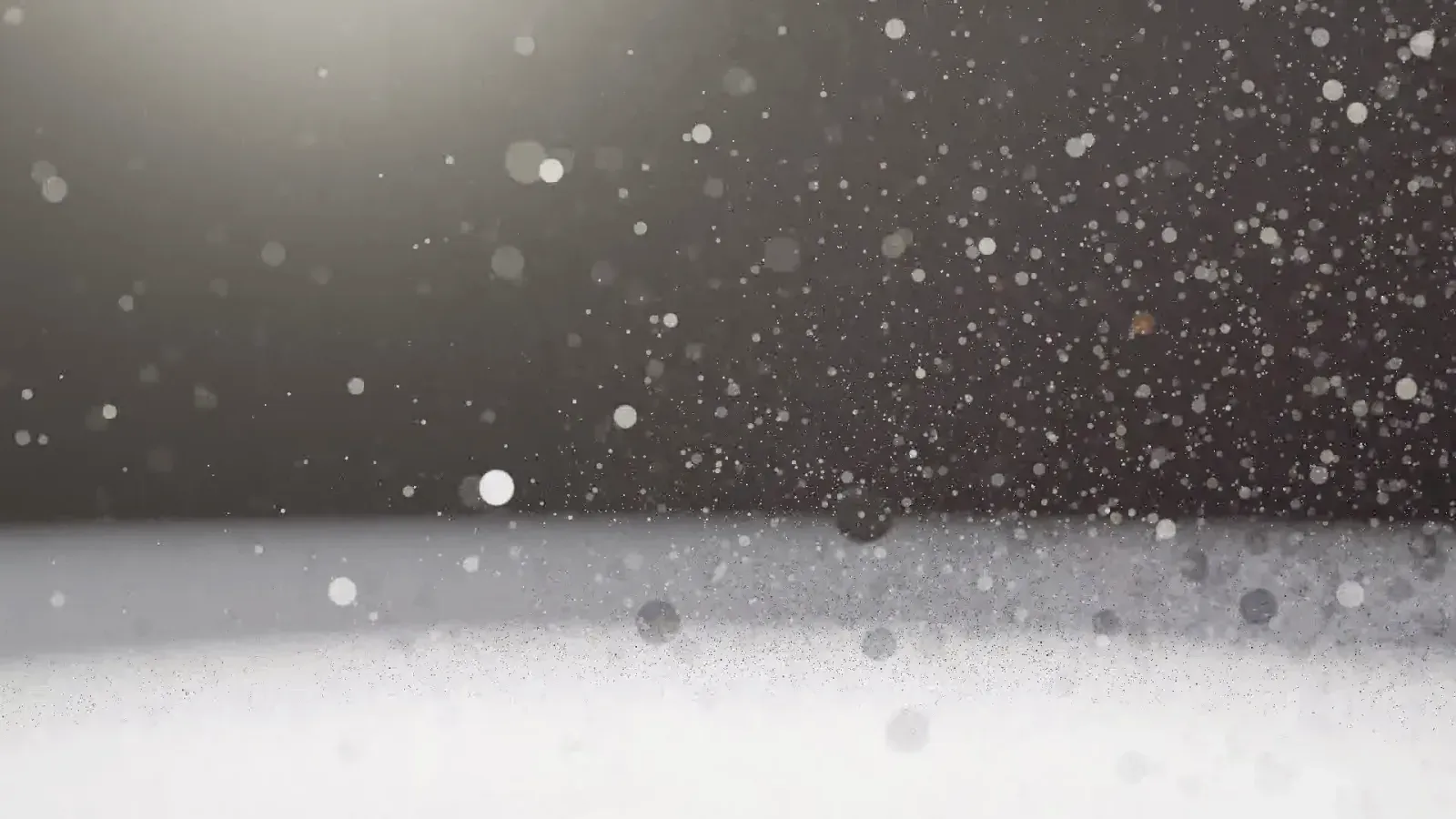
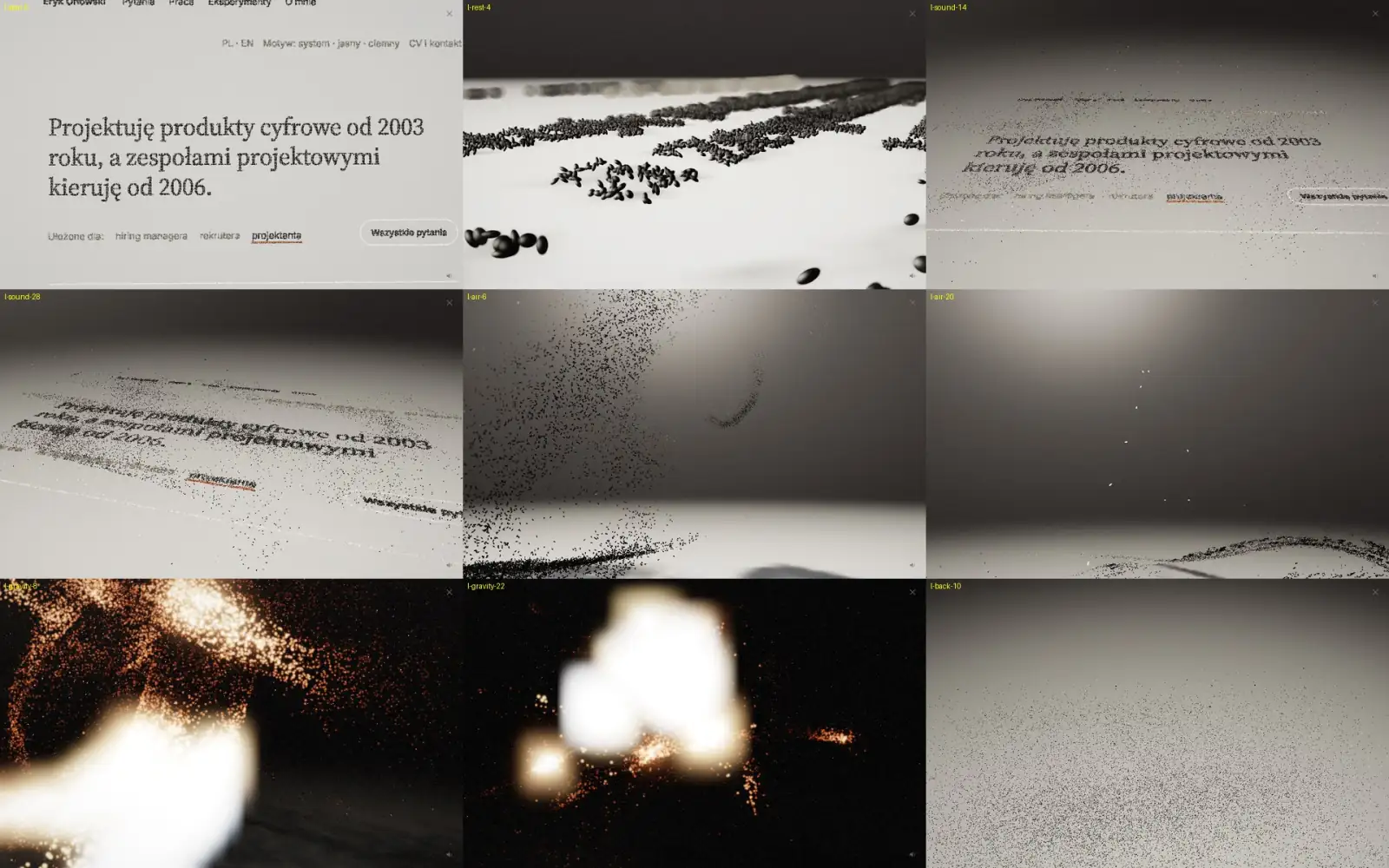
Filings (PL): iron filings lay out the text of the page, then the heading crumbles into dust and returns. The cycle is just under three minutes and loops.
Ice (PL): the page freezes from the corners, patterns of frost spread across the text, the camera pulls back and the sheet lies in black ice on a lake at dawn. The cycle lasts five minutes and it is the only one that ends by itself after a single run.
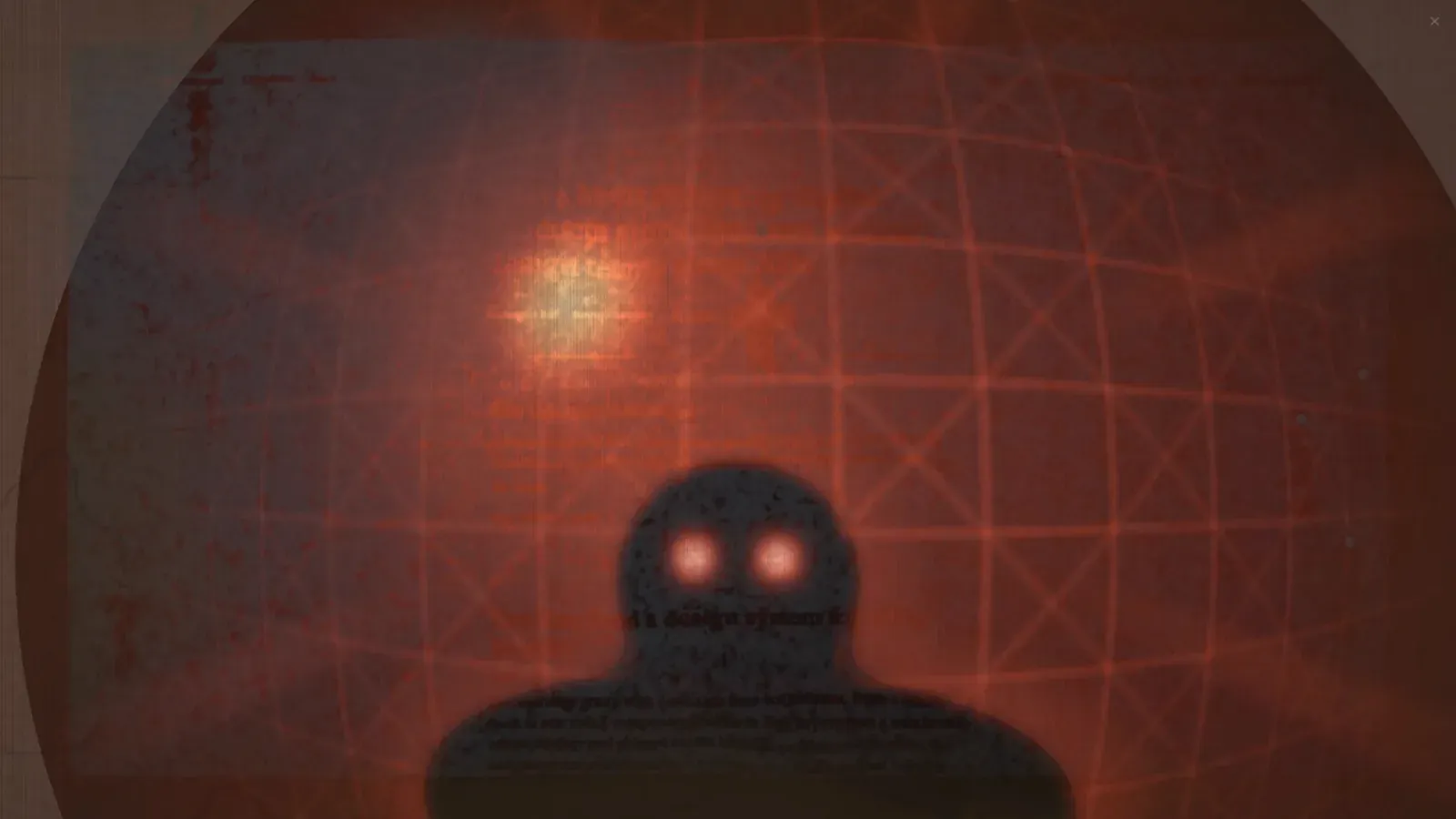
Latent image (PL): the page develops like a print in a darkroom and pulls figures out of the grain that move only when you are not looking. A full cycle takes about seven minutes and loops.
How to open it. Go to the site and do not touch anything for about two seconds: the film starts by itself, as the page you are on. After that mouse movement influences the scene, and holding the button (or a finger) is a separate input: in Ice a click strikes the ice and sets off a crack, in Filings holding changes the force. Sound is generated entirely on the fly and starts only after a gesture, for example after clicking the sound icon in the bar (hovering it also shows the quality and the photo mode). Escape or the cross closes the film and hands the page back. Filings needs WebGPU, that is Chrome or Edge on a computer; the others, including Bubble and Ten Thousand Years, need WebGL2. When the browser cannot cope, nothing happens and the page stays a page. If you would rather leave it to fate, the designer view (PL) draws one of the six.
Later laps are not copies. The films play in a loop and something in them changes on every lap, so it pays to stay and look for differences. In Ten Thousand Years, after the clock wraps, the next slab appears: the same page, carved anew with a different seed, with other lichen, other cracks, a different broken corner, other ivy and trees. In Latent image every cycle is planned afresh: from the sixth on, the route and the lens are drawn at random, and grain, contrast and tone grow from cycle to cycle. In Filings the sheet vibrates in three modes in a row and gets a different set of four every cycle. This comes from the code, not from watching it in a browser.
What is in the pool
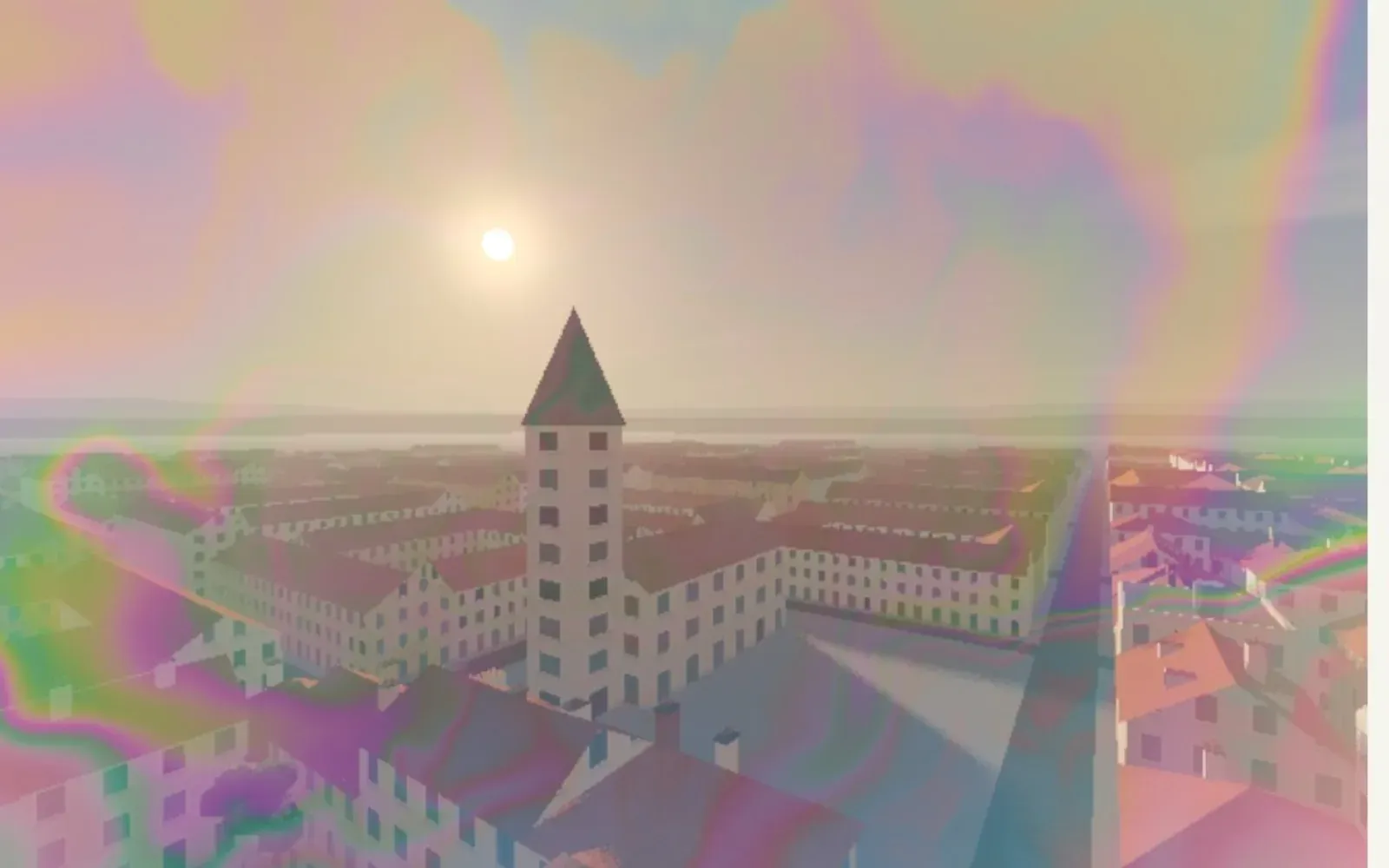
Today the pool holds “Latent image”, in which the page develops like a print in a darkroom and pulls figures out of the grain that move only when you are not looking (see the film Latent image), and “Filings” (see the film Filings). And there's more — the ink that for a second arranges itself into a word (see the film Ink), ice, a soap bubble seen from the inside and a slab that lives through ten thousand years in five minutes.
The cat with the dead cursor did not make it into the pool. Ice did, the film in which the page you are reading right now freezes over.
The draft was prepared by AI agents; the editing and the fact-checking are mine. How these texts are made →